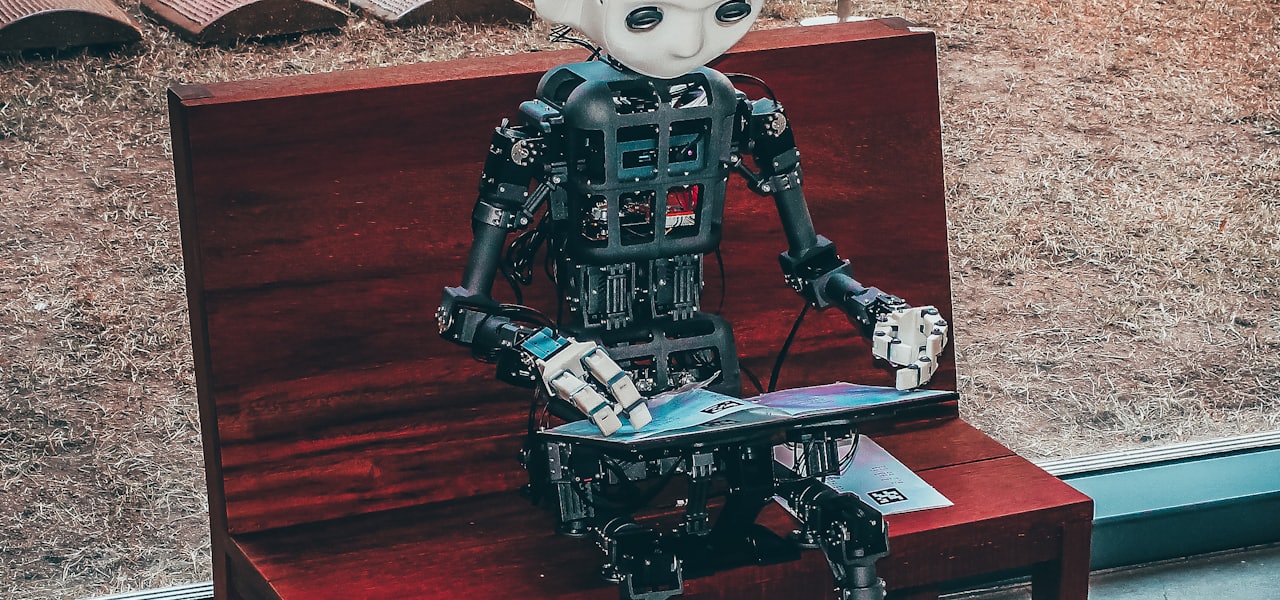
AI Generator Free Image

AI Generator Free Image — independent reviews, comparisons, pricing and step-by-step guides on Aizhi.

  • Coupled pattern learner

    Coupled pattern learner

    Coupled Pattern Learner (CPL) is a machine learning algorithm which couples the semi-supervised learning of categories and relations to forestall the problem of semantic drift associated with boot-strap learning methods. == Coupled Pattern Learner == Semi-supervised learning approaches using a small number of labeled examples with many unlabeled examples are usually unreliable as they produce an internally consistent, but incorrect set of extractions. CPL solves this problem by simultaneously learning classifiers for many different categories and relations in the presence of an ontology defining constraints that couple the training of these classifiers. It was introduced by Andrew Carlson, Justin Betteridge, Estevam R. Hruschka Jr. and Tom M. Mitchell in 2009. == CPL overview == CPL is an approach to semi-supervised learning that yields more accurate results by coupling the training of many information extractors. Basic idea behind CPL is that semi-supervised training of a single type of extractor such as ‘coach’ is much more difficult than simultaneously training many extractors that cover a variety of inter-related entity and relation types. Using prior knowledge about the relationships between these different entities and relations CPL makes unlabeled data as a useful constraint during training. For e.g., ‘coach(x)’ implies ‘person(x)’ and ‘not sport(x)’. == CPL description == === Coupling of predicates === CPL primarily relies on the notion of coupling the learning of multiple functions so as to constrain the semi-supervised learning problem. CPL constrains the learned function in two ways. Sharing among same-arity predicates according to logical relations Relation argument type-checking === Sharing among same-arity predicates === Each predicate P in the ontology has a list of other same-arity predicates with which P is mutually exclusive. If A is mutually exclusive with predicate B, A’s positive instances and patterns become negative instances and negative patterns for B. For example, if ‘city’, having an instance ‘Boston’ and a pattern ‘mayor of arg1’, is mutually exclusive with ‘scientist’, then ‘Boston’ and ‘mayor of arg1’ will become a negative instance and a negative pattern respectively for ‘scientist.’ Further, Some categories are declared to be a subset of another category. For e.g., ‘athlete’ is a subset of ‘person’. === Relation argument type-checking === This is a type checking information used to couple the learning of relations and categories. For example, the arguments of the ‘ceoOf’ relation are declared to be of the categories ‘person’ and ‘company’. CPL does not promote a pair of noun phrases as an instance of a relation unless the two noun phrases are classified as belonging to the correct argument types. === Algorithm description === Following is a quick summary of the CPL algorithm. Input: An ontology O, and a text corpus C Output: Trusted instances/patterns for each predicate for i=1,2,...,∞ do foreach predicate p in O do EXTRACT candidate instances/contextual patterns using recently promoted patterns/instances; FILTER candidates that violate coupling; RANK candidate instances/patterns; PROMOTE top candidates; end end ==== Inputs ==== A large corpus of Part-Of-Speech tagged sentences and an initial ontology with predefined categories, relations, mutually exclusive relationships between same-arity predicates, subset relationships between some categories, seed instances for all predicates, and seed patterns for the categories. ==== Candidate extraction ==== CPL finds new candidate instances by using newly promoted patterns to extract the noun phrases that co-occur with those patterns in the text corpus. CPL extracts, Category Instances Category Patterns Relation Instances Relation Patterns ==== Candidate filtering ==== Candidate instances and patterns are filtered to maintain high precision, and to avoid extremely specific patterns. An instance is only considered for assessment if it co-occurs with at least two promoted patterns in the text corpus, and if its co-occurrence count with all promoted patterns is at least three times greater than its co-occurrence count with negative patterns. ==== Candidate ranking ==== CPL ranks candidate instances using the number of promoted patterns that they co-occur with so that candidates that occur with more patterns are ranked higher. Patterns are ranked using an estimate of the precision of each pattern. ==== Candidate promotion ==== CPL ranks the candidates according to their assessment scores and promotes at most 100 instances and 5 patterns for each predicate. Instances and patterns are only promoted if they co-occur with at least two promoted patterns or instances, respectively. == Meta-Bootstrap Learner == Meta-Bootstrap Learner (MBL) was also proposed by the authors of CPL. Meta-Bootstrap learner couples the training of multiple extraction techniques with a multi-view constraint, which requires the extractors to agree. It makes addition of coupling constraints on top of existing extraction algorithms, while treating them as black boxes, feasible. MBL assumes that the errors made by different extraction techniques are independent. Following is a quick summary of MBL. Input: An ontology O, a set of extractors ε Output: Trusted instances for each predicate for i=1,2,...,∞ do foreach predicate p in O do foreach extractor e in ε do Extract new candidates for p using e with recently promoted instances; end FILTER candidates that violate mutual-exclusion or type-checking constraints; PROMOTE candidates that were extracted by all extractors; end end Subordinate algorithms used with MBL do not promote any instance on their own, they report the evidence about each candidate to MBL and MBL is responsible for promoting instances. == Applications == In their paper authors have presented results showing the potential of CPL to contribute new facts to existing repository of semantic knowledge, Freebase

    Read more →
  • Constellation model

    Constellation model

    The constellation model is a probabilistic, generative model for category-level object recognition in computer vision. Like other part-based models, the constellation model attempts to represent an object class by a set of N parts under mutual geometric constraints. Because it considers the geometric relationship between different parts, the constellation model differs significantly from appearance-only, or "bag-of-words" representation models, which explicitly disregard the location of image features. The problem of defining a generative model for object recognition is difficult. The task becomes significantly complicated by factors such as background clutter, occlusion, and variations in viewpoint, illumination, and scale. Ideally, we would like the particular representation we choose to be robust to as many of these factors as possible. In category-level recognition, the problem is even more challenging because of the fundamental problem of intra-class variation. Even if two objects belong to the same visual category, their appearances may be significantly different. However, for structured objects such as cars, bicycles, and people, separate instances of objects from the same category are subject to similar geometric constraints. For this reason, particular parts of an object such as the headlights or tires of a car still have consistent appearances and relative positions. The Constellation Model takes advantage of this fact by explicitly modeling the relative location, relative scale, and appearance of these parts for a particular object category. Model parameters are estimated using an unsupervised learning algorithm, meaning that the visual concept of an object class can be extracted from an unlabeled set of training images, even if that set contains "junk" images or instances of objects from multiple categories. It can also account for the absence of model parts due to appearance variability, occlusion, clutter, or detector error. == History == The idea for a "parts and structure" model was originally introduced by Fischler and Elschlager in 1973. This model has since been built upon and extended in many directions. The Constellation Model, as introduced by Dr. Perona and his colleagues, was a probabilistic adaptation of this approach. In the late '90s, Burl et al. revisited the Fischler and Elschlager model for the purpose of face recognition. In their work, Burl et al. used manual selection of constellation parts in training images to construct a statistical model for a set of detectors and the relative locations at which they should be applied. In 2000, Weber et al. made the significant step of training the model using a more unsupervised learning process, which precluded the necessity for tedious hand-labeling of parts. Their algorithm was particularly remarkable because it performed well even on cluttered and occluded image data. Fergus et al. then improved upon this model by making the learning step fully unsupervised, having both shape and appearance learned simultaneously, and accounting explicitly for the relative scale of parts. == The method of Weber and Welling et al. == In the first step, a standard interest point detection method, such as Harris corner detection, is used to generate interest points. Image features generated from the vicinity of these points are then clustered using k-means or another appropriate algorithm. In this process of vector quantization, one can think of the centroids of these clusters as being representative of the appearance of distinctive object parts. Appropriate feature detectors are then trained using these clusters, which can be used to obtain a set of candidate parts from images. As a result of this process, each image can now be represented as a set of parts. Each part has a type, corresponding to one of the aforementioned appearance clusters, as well as a location in the image space. === Basic generative model === Weber & Welling here introduce the concept of foreground and background. Foreground parts correspond to an instance of a target object class, whereas background parts correspond to background clutter or false detections. Let T be the number of different types of parts. The positions of all parts extracted from an image can then be represented in the following "matrix," X o = ( x 11 , x 12 , ⋯ , x 1 N 1 x 21 , x 22 , ⋯ , x 2 N 2 ⋮ x T 1 , x T 2 , ⋯ , x T N T ) {\displaystyle X^{o}={\begin{pmatrix}x_{11},x_{12},{\cdots },x_{1N_{1}}\\x_{21},x_{22},{\cdots },x_{2N_{2}}\\\vdots \\x_{T1},x_{T2},{\cdots },x_{TN_{T}}\end{pmatrix}}} where N i {\displaystyle N_{i}\,} represents the number of parts of type i ∈ { 1 , … , T } {\displaystyle i\in \{1,\dots ,T\}} observed in the image. The superscript o indicates that these positions are observable, as opposed to missing. The positions of unobserved object parts can be represented by the vector x m {\displaystyle x^{m}\,} . Suppose that the object will be composed of F {\displaystyle F\,} distinct foreground parts. For notational simplicity, we assume here that F = T {\displaystyle F=T\,} , though the model can be generalized to F > T {\displaystyle F>T\,} . A hypothesis h {\displaystyle h\,} is then defined as a set of indices, with h i = j {\displaystyle h_{i}=j\,} , indicating that point x i j {\displaystyle x_{ij}\,} is a foreground point in X o {\displaystyle X^{o}\,} . The generative probabilistic model is defined through the joint probability density p ( X o , x m , h ) {\displaystyle p(X^{o},x^{m},h)\,} . === Model details === The rest of this section summarizes the details of Weber & Welling's model for a single component model. The formulas for multiple component models are extensions of those described here. To parametrize the joint probability density, Weber & Welling introduce the auxiliary variables b {\displaystyle b\,} and n {\displaystyle n\,} , where b {\displaystyle b\,} is a binary vector encoding the presence/absence of parts in detection ( b i = 1 {\displaystyle b_{i}=1\,} if h i > 0 {\displaystyle h_{i}>0\,} , otherwise b i = 0 {\displaystyle b_{i}=0\,} ), and n {\displaystyle n\,} is a vector where n i {\displaystyle n_{i}\,} denotes the number of background candidates included in the i t h {\displaystyle i^{th}} row of X o {\displaystyle X^{o}\,} . Since b {\displaystyle b\,} and n {\displaystyle n\,} are completely determined by h {\displaystyle h\,} and the size of X o {\displaystyle X^{o}\,} , we have p ( X o , x m , h ) = p ( X o , x m , h , n , b ) {\displaystyle p(X^{o},x^{m},h)=p(X^{o},x^{m},h,n,b)\,} . By decomposition, p ( X o , x m , h , n , b ) = p ( X o , x m | h , n , b ) p ( h | n , b ) p ( n ) p ( b ) {\displaystyle p(X^{o},x^{m},h,n,b)=p(X^{o},x^{m}|h,n,b)p(h|n,b)p(n)p(b)\,} The probability density over the number of background detections can be modeled by a Poisson distribution, p ( n ) = ∏ i = 1 T 1 n i ! ( M i ) n i e − M i {\displaystyle p(n)=\prod _{i=1}^{T}{\frac {1}{n_{i}!}}(M_{i})^{n_{i}}e^{-M_{i}}} where M i {\displaystyle M_{i}\,} is the average number of background detections of type i {\displaystyle i\,} per image. Depending on the number of parts F {\displaystyle F\,} , the probability p ( b ) {\displaystyle p(b)\,} can be modeled either as an explicit table of length 2 F {\displaystyle 2^{F}\,} , or, if F {\displaystyle F\,} is large, as F {\displaystyle F\,} independent probabilities, each governing the presence of an individual part. The density p ( h | n , b ) {\displaystyle p(h|n,b)\,} is modeled by p ( h | n , b ) = { 1 ∏ f = 1 F N f b f , if h ∈ H ( b , n ) 0 , for other h {\displaystyle p(h|n,b)={\begin{cases}{\frac {1}{\textstyle \prod _{f=1}^{F}N_{f}^{b_{f}}}},&{\mbox{if }}h\in H(b,n)\\0,&{\mbox{for other }}h\end{cases}}} where H ( b , n ) {\displaystyle H(b,n)\,} denotes the set of all hypotheses consistent with b {\displaystyle b\,} and n {\displaystyle n\,} , and N f {\displaystyle N_{f}\,} denotes the total number of detections of parts of type f {\displaystyle f\,} . This expresses the fact that all consistent hypotheses, of which there are ∏ f = 1 F N f b f {\displaystyle \textstyle \prod _{f=1}^{F}N_{f}^{b_{f}}} , are equally likely in the absence of information on part locations. And finally, p ( X o , x m | h , n ) = p f g ( z ) p b g ( x b g ) {\displaystyle p(X^{o},x^{m}|h,n)=p_{fg}(z)p_{bg}(x_{bg})\,} where z = ( x o x m ) {\displaystyle z=(x^{o}x^{m})\,} are the coordinates of all foreground detections, observed and missing, and x b g {\displaystyle x_{bg}\,} represents the coordinates of the background detections. Note that foreground detections are assumed to be independent of the background. p f g ( z ) {\displaystyle p_{fg}(z)\,} is modeled as a joint Gaussian with mean μ {\displaystyle \mu \,} and covariance Σ {\displaystyle \Sigma \,} . === Classification === The ultimate objective of this model is to classify images into classes "object present" (class C 1 {\displaystyle C_{1}\,} ) and "object absent" (class C 0 {\displaystyle C_{0}\,} ) given t

    Read more →
  • Semidefinite embedding

    Semidefinite embedding

    Maximum Variance Unfolding (MVU), also known as Semidefinite Embedding (SDE), is an algorithm in computer science that uses semidefinite programming to perform non-linear dimensionality reduction of high-dimensional vectorial input data. It is motivated by the observation that kernel Principal Component Analysis (kPCA) does not reduce the data dimensionality, as it leverages the Kernel trick to non-linearly map the original data into an inner-product space. == Algorithm == MVU creates a mapping from the high dimensional input vectors to some low dimensional Euclidean vector space in the following steps: A neighbourhood graph is created. Each input is connected with its k-nearest input vectors (according to Euclidean distance metric) and all k-nearest neighbors are connected with each other. If the data is sampled well enough, the resulting graph is a discrete approximation of the underlying manifold. The neighbourhood graph is "unfolded" with the help of semidefinite programming. Instead of learning the output vectors directly, the semidefinite programming aims to find an inner product matrix that maximizes the pairwise distances between any two inputs that are not connected in the neighbourhood graph while preserving the nearest neighbors distances. The low-dimensional embedding is finally obtained by application of multidimensional scaling on the learned inner product matrix. The steps of applying semidefinite programming followed by a linear dimensionality reduction step to recover a low-dimensional embedding into a Euclidean space were first proposed by Linial, London, and Rabinovich. == Optimization formulation == Let X {\displaystyle X\,\!} be the original input and Y {\displaystyle Y\,\!} be the embedding. If i , j {\displaystyle i,j\,\!} are two neighbors, then the local isometry constraint that needs to be satisfied is: | X i − X j | 2 = | Y i − Y j | 2 {\displaystyle |X_{i}-X_{j}|^{2}=|Y_{i}-Y_{j}|^{2}\,\!} Let G , K {\displaystyle G,K\,\!} be the Gram matrices of X {\displaystyle X\,\!} and Y {\displaystyle Y\,\!} (i.e.: G i j = X i ⋅ X j , K i j = Y i ⋅ Y j {\displaystyle G_{ij}=X_{i}\cdot X_{j},K_{ij}=Y_{i}\cdot Y_{j}\,\!} ). We can express the above constraint for every neighbor points i , j {\displaystyle i,j\,\!} in term of G , K {\displaystyle G,K\,\!} : G i i + G j j − G i j − G j i = K i i + K j j − K i j − K j i {\displaystyle G_{ii}+G_{jj}-G_{ij}-G_{ji}=K_{ii}+K_{jj}-K_{ij}-K_{ji}\,\!} In addition, we also want to constrain the embedding Y {\displaystyle Y\,\!} to center at the origin: 0 = | ∑ i Y i | 2 ⇔ ( ∑ i Y i ) ⋅ ( ∑ i Y i ) ⇔ ∑ i , j Y i ⋅ Y j ⇔ ∑ i , j K i j {\displaystyle 0=|\sum _{i}Y_{i}|^{2}\Leftrightarrow (\sum _{i}Y_{i})\cdot (\sum _{i}Y_{i})\Leftrightarrow \sum _{i,j}Y_{i}\cdot Y_{j}\Leftrightarrow \sum _{i,j}K_{ij}} As described above, except the distances of neighbor points are preserved, the algorithm aims to maximize the pairwise distance of every pair of points. The objective function to be maximized is: T ( Y ) = 1 2 N ∑ i , j | Y i − Y j | 2 {\displaystyle T(Y)={\dfrac {1}{2N}}\sum _{i,j}|Y_{i}-Y_{j}|^{2}} Intuitively, maximizing the function above is equivalent to pulling the points as far away from each other as possible and therefore "unfold" the manifold. The local isometry constraint Let τ = m a x { η i j | Y i − Y j | 2 } {\displaystyle \tau =max\{\eta _{ij}|Y_{i}-Y_{j}|^{2}\}\,\!} where η i j := { 1 if i is a neighbour of j 0 otherwise . {\displaystyle \eta _{ij}:={\begin{cases}1&{\mbox{if}}\ i{\mbox{ is a neighbour of }}j\\0&{\mbox{otherwise}}.\end{cases}}} prevents the objective function from diverging (going to infinity). Since the graph has N points, the distance between any two points | Y i − Y j | 2 ≤ N τ {\displaystyle |Y_{i}-Y_{j}|^{2}\leq N\tau \,\!} . We can then bound the objective function as follows: T ( Y ) = 1 2 N ∑ i , j | Y i − Y j | 2 ≤ 1 2 N ∑ i , j ( N τ ) 2 = N 3 τ 2 2 {\displaystyle T(Y)={\dfrac {1}{2N}}\sum _{i,j}|Y_{i}-Y_{j}|^{2}\leq {\dfrac {1}{2N}}\sum _{i,j}(N\tau )^{2}={\dfrac {N^{3}\tau ^{2}}{2}}\,\!} The objective function can be rewritten purely in the form of the Gram matrix: T ( Y ) = 1 2 N ∑ i , j | Y i − Y j | 2 = 1 2 N ∑ i , j ( Y i 2 + Y j 2 − Y i ⋅ Y j − Y j ⋅ Y i ) = 1 2 N ( ∑ i , j Y i 2 + ∑ i , j Y j 2 − ∑ i , j Y i ⋅ Y j − ∑ i , j Y j ⋅ Y i ) = 1 2 N ( ∑ i , j Y i 2 + ∑ i , j Y j 2 − 0 − 0 ) = 1 N ( ∑ i Y i 2 ) = 1 N ( T r ( K ) ) {\displaystyle {\begin{aligned}T(Y)&{}={\dfrac {1}{2N}}\sum _{i,j}|Y_{i}-Y_{j}|^{2}\\&{}={\dfrac {1}{2N}}\sum _{i,j}(Y_{i}^{2}+Y_{j}^{2}-Y_{i}\cdot Y_{j}-Y_{j}\cdot Y_{i})\\&{}={\dfrac {1}{2N}}(\sum _{i,j}Y_{i}^{2}+\sum _{i,j}Y_{j}^{2}-\sum _{i,j}Y_{i}\cdot Y_{j}-\sum _{i,j}Y_{j}\cdot Y_{i})\\&{}={\dfrac {1}{2N}}(\sum _{i,j}Y_{i}^{2}+\sum _{i,j}Y_{j}^{2}-0-0)\\&{}={\dfrac {1}{N}}(\sum _{i}Y_{i}^{2})={\dfrac {1}{N}}(Tr(K))\\\end{aligned}}\,\!} Finally, the optimization can be formulated as: Maximize T r ( K ) subject to K ⪰ 0 , ∑ i j K i j = 0 and G i i + G j j − G i j − G j i = K i i + K j j − K i j − K j i , ∀ i , j where η i j = 1 , {\displaystyle {\begin{aligned}&{\text{Maximize}}&&Tr(\mathbf {K} )\\&{\text{subject to}}&&\mathbf {K} \succeq 0,\sum _{ij}\mathbf {K} _{ij}=0\\&{\text{and}}&&G_{ii}+G_{jj}-G_{ij}-G_{ji}=K_{ii}+K_{jj}-K_{ij}-K_{ji},\forall i,j{\mbox{ where }}\eta _{ij}=1,\end{aligned}}} After the Gram matrix K {\displaystyle K\,\!} is learned by semidefinite programming, the output Y {\displaystyle Y\,\!} can be obtained via Cholesky decomposition. In particular, the Gram matrix can be written as K i j = ∑ α = 1 N ( λ α V α i V α j ) {\displaystyle K_{ij}=\sum _{\alpha =1}^{N}(\lambda _{\alpha }V_{\alpha i}V_{\alpha j})\,\!} where V α i {\displaystyle V_{\alpha i}\,\!} is the i-th element of eigenvector V α {\displaystyle V_{\alpha }\,\!} of the eigenvalue λ α {\displaystyle \lambda _{\alpha }\,\!} . It follows that the α {\displaystyle \alpha \,\!} -th element of the output Y i {\displaystyle Y_{i}\,\!} is λ α V α i {\displaystyle {\sqrt {\lambda _{\alpha }}}V_{\alpha i}\,\!} .

    Read more →
  • Radial basis function

    Radial basis function

    In mathematics a radial basis function (RBF) is a real-valued function φ {\textstyle \varphi } whose value depends only on the distance between the input and some fixed point, either the origin, so that φ ( x ) = φ ^ ( ‖ x ‖ ) {\textstyle \varphi (\mathbf {x} )={\hat {\varphi }}(\left\|\mathbf {x} \right\|)} , or some other fixed point c {\textstyle \mathbf {c} } , called a center, so that φ ( x ) = φ ^ ( ‖ x − c ‖ ) {\textstyle \varphi (\mathbf {x} )={\hat {\varphi }}(\left\|\mathbf {x} -\mathbf {c} \right\|)} . Any function φ {\textstyle \varphi } that satisfies the property φ ( x ) = φ ^ ( ‖ x ‖ ) {\textstyle \varphi (\mathbf {x} )={\hat {\varphi }}(\left\|\mathbf {x} \right\|)} is a radial function. The distance is usually Euclidean distance, although other metrics are sometimes used. They are often used as a collection { φ k } k {\displaystyle \{\varphi _{k}\}_{k}} which forms a basis for some function space of interest, hence the name. Sums of radial basis functions are typically used to approximate given functions. This approximation process can also be interpreted as a simple kind of neural network; this was the context in which they were originally applied to machine learning, in work by David Broomhead and David Lowe in 1988, which stemmed from Michael J. D. Powell's seminal research from 1977. RBFs are also used as a kernel in support vector classification. The technique has proven effective and flexible enough that radial basis functions are now applied in a variety of engineering applications. == Definition == A radial function is a function φ : [ 0 , ∞ ) → R {\textstyle \varphi :[0,\infty )\to \mathbb {R} } . When paired with a norm ‖ ⋅ ‖ : V → [ 0 , ∞ ) {\textstyle \|\cdot \|:V\to [0,\infty )} on a vector space, a function of the form φ c = φ ( ‖ x − c ‖ ) {\textstyle \varphi _{\mathbf {c} }=\varphi (\|\mathbf {x} -\mathbf {c} \|)} is said to be a radial kernel centered at c ∈ V {\textstyle \mathbf {c} \in V} . A radial function and the associated radial kernels are said to be radial basis functions if, for any finite set of nodes { x k } k = 1 n ⊆ V {\displaystyle \{\mathbf {x} _{k}\}_{k=1}^{n}\subseteq V} , all of the following conditions are true: === Examples === Commonly used types of radial basis functions include (writing r = ‖ x − x i ‖ {\textstyle r=\left\|\mathbf {x} -\mathbf {x} _{i}\right\|} and using ε {\textstyle \varepsilon } to indicate a shape parameter that can be used to scale the input of the radial kernel): == Approximation == Radial basis functions are typically used to build up function approximations of the form where the approximating function y ( x ) {\textstyle y(\mathbf {x} )} is represented as a sum of N {\displaystyle N} radial basis functions, each associated with a different center x i {\textstyle \mathbf {x} _{i}} , and weighted by an appropriate coefficient w i . {\textstyle w_{i}.} The weights w i {\textstyle w_{i}} can be estimated using the matrix methods of linear least squares, because the approximating function is linear in the weights w i {\textstyle w_{i}} . Approximation schemes of this kind have been particularly used in time series prediction and control of nonlinear systems exhibiting sufficiently simple chaotic behaviour and 3D reconstruction in computer graphics (for example, hierarchical RBF and Pose Space Deformation). == RBF Network == The sum can also be interpreted as a rather simple single-layer type of artificial neural network called a radial basis function network, with the radial basis functions taking on the role of the activation functions of the network. It can be shown that any continuous function on a compact interval can in principle be interpolated with arbitrary accuracy by a sum of this form, if a sufficiently large number N {\textstyle N} of radial basis functions is used. The approximant y ( x ) {\textstyle y(\mathbf {x} )} is differentiable with respect to the weights w i {\textstyle w_{i}} . The weights could thus be learned using any of the standard iterative methods for neural networks. Using radial basis functions in this manner yields a reasonable interpolation approach provided that the fitting set has been chosen such that it covers the entire range systematically (equidistant data points are ideal). However, without a polynomial term that is orthogonal to the radial basis functions, estimates outside the fitting set tend to perform poorly. == RBFs for PDEs == Radial basis functions are used to approximate functions and so can be used to discretize and numerically solve Partial Differential Equations (PDEs). This was first done in 1990 by E. J. Kansa who developed the first RBF based numerical method. It is called the Kansa method and was used to solve the elliptic Poisson equation and the linear advection-diffusion equation. The function values at points x {\displaystyle \mathbf {x} } in the domain are approximated by the linear combination of RBFs: The derivatives are approximated as such: where N {\displaystyle N} are the number of points in the discretized domain, d {\displaystyle d} the dimension of the domain and λ {\displaystyle \lambda } the scalar coefficients that are unchanged by the differential operator. Different numerical methods based on Radial Basis Functions were developed thereafter. Some methods are the RBF-FD method, the RBF-QR method and the RBF-PUM method.

    Read more →
  • Amazon Elastic Compute Cloud

    Amazon Elastic Compute Cloud

    Amazon Elastic Compute Cloud (EC2) is a part of Amazon's cloud-computing platform, Amazon Web Services (AWS), that allows users to rent virtual computers on which to run their own computer applications. EC2 encourages scalable deployment of applications by providing a web service through which a user can boot an Amazon Machine Image (AMI) to configure a virtual machine, which Amazon calls an "instance", containing any software desired. A user can create, launch, and terminate server-instances as needed, paying by the second for active servers – hence the term "elastic". EC2 provides users with control over the geographical location of instances that allows for latency optimization and high levels of redundancy. In November 2010, Amazon switched its own retail website platform to EC2 and AWS. == History == Amazon announced a limited public beta test of EC2 on August 25, 2006, offering access on a first-come, first-served basis. Amazon added two new instance types (Large and Extra-Large) on October 16, 2007. On May 29, 2008, two more types were added, High-CPU Medium and High-CPU Extra Large. There were twelve types of instances available. Amazon added three new features on March 27, 2008: static IP addresses, availability zones, and user-selectable kernels. On August 20, 2008, Amazon added Elastic Block Store (EBS). This provides persistent storage, a feature that had been lacking since the service was introduced. Amazon EC2 went into full production when it dropped the beta label on October 23, 2008. On the same day, Amazon announced the following features: a service level agreement for EC2, Microsoft Windows in beta form on EC2, Microsoft SQL Server in beta form on EC2, plans for an AWS management console, and plans for load balancing, autoscaling, and cloud monitoring services. These features were subsequently added on May 18, 2009. Amazon EC2 was developed mostly by a team in Cape Town, South Africa led by Chris Pinkham. Pinkham provided the initial architecture guidance for EC2 and then built the team and led the development of the project along with Willem van Biljon. == Instance types == Initially, EC2 used Xen virtualization exclusively. However, on November 6, 2017, Amazon announced the new C5 family of instances that were based on a custom architecture around the KVM hypervisor, called Nitro. Each virtual machine, called an "instance", functions as a virtual private server. Amazon sizes instances based on "Elastic Compute Units". The performance of otherwise identical virtual machines may vary. On November 28, 2017, AWS announced a bare-metal instance, a departure from exclusively offering virtualized instance types. As of January 2019, the following instance types were offered: General Purpose: A1, T3, T2, M5, M5a, M4, T3a Compute Optimized: C5, C5n, C4 Memory Optimized: R5, R5a, R4, X1e, X1, High Memory, z1d Accelerated Computing: P3, P2, G3, F1 Storage Optimized: H1, I3, D2 As of April 2018, the following payment methods by instance were offered: On-demand: pay by the hour without commitment. Reserved: rent instances with one-time payment receiving discounts on the hourly charge. Spot: bid-based service: runs the jobs only if the spot price is below the bid specified by bidder. The spot price is claimed to be supply-demand based, however a 2011 study concluded that the price was generally not set to clear the market, but was dominated by an undisclosed reserve price. In 2025, AWS expanded EC2 with the compute-optimized C8gn family, powered by Graviton4 and offering up to 600 Gbit/s network bandwidth (about 30% higher compute performance than C7gn), and introduced G6f fractional-GPU instances that let customers provision one-eighth, one-quarter, or one-half of an NVIDIA L4 GPU for right-sized graphics/ML workloads. === Cost === As of April 2018, Amazon charged about $0.0058 per hour ($4.176 per month) for the smallest "Nano Instance" (t2.nano) virtual machine running Linux or Windows. Storage-optimized instances cost as much as $4.992 per hour (i3.16xlarge). "Reserved" instances can go as low as $2.50 per month for a three-year prepaid plan. The data transfer charge ranges from free to $0.12 per gigabyte, depending on the direction and monthly volume (inbound data transfer is free on all AWS services). EC2 costs can be analyzed using the Amazon Cost and Usage Report. There are many different cost categories for EC2 including: hourly Instance Charges, Data Transfer, EBS Volumes, EBS Volume Snapshots, and Nat Gateway. === Free tier === As of December 2010 Amazon offered a bundle of free resource credits to new account holders. The credits are designed to run a "micro" sized server, storage (EBS), and bandwidth for one year. Unused credits cannot be carried over from one month to the next. === Reserved instances === Reserved instances enable EC2 or RDS service users to reserve an instance for one or three years. The corresponding hourly rate charged by Amazon to operate the instance is 35 to 75% lower than the rate charged for on-demand instances. Reserved instances can be purchased with three different payment options: All Upfront, Partial Upfront and No Upfront. The different purchase options allow for different structuring of payment models, with a larger discount given to customers that pay their reservation upfront. Reserved Instances are purchased based on a resource commitment. These reservations are made based on an instance type and a count of that instance type. For example, you could reserve 100 i3.large instances for a 3-year term. In September 2016, AWS announced several enhancements to Reserved instances, introducing a new feature called scope and a new reservation type called a Convertible. In October 2017, AWS announced the allowance to subdivide the instances purchased for more flexibility. === Spot instances === Cloud providers maintain large amounts of excess capacity they have to sell or risk incurring losses. Amazon EC2 Spot instances are spare compute capacity in the AWS cloud available at up to 90% discount compared to On-Demand prices. As a trade-off, AWS offers no SLA on these instances and customers take the risk that it can be interrupted with only two minutes of notification when Amazon needs the capacity back. Researchers from the Israeli Institute of Technology found that "they (Spot instances) are typically generated at random from within a tight price interval via a dynamic hidden reserve price". Some companies, like Spotinst, are using machine learning to predict spot interruptions up to 15 minutes in advance. === Savings Plans === In November 2019, Amazon announced Savings Plans. Savings Plans are an alternative to Reserved Instances that come in two different plan types: Compute Savings Plans and EC2 Instances Savings Plans. Compute Savings Plans allow an organization to commit to EC2 and Fargate usage with the freedom to change region, family, size, availability zone, OS and tenancy inside the lifespan of the commitment. EC2 Instance Savings plans provide a larger discount than Compute Savings Plans but are less flexible meaning a user must commit to individual instance families within a region to take advantage, but with the freedom to change instances within the family in that region. AWS uses the Cost Explorer to automatically calculate recommendations for the commitments you should make how that commitment will look like as a monthly charge on your AWS bill. AWS Savings Plans are purchased based on hourly spend commitment. This hourly commitment is made using the discounted pricing of the savings plan you are purchasing. For example, you could commit to spending $5 per hour, on a Compute Savings Plan, for a 3-year term. == Features == === Operating systems === When it launched in August 2006, the EC2 service offered Linux and later Sun Microsystems' OpenSolaris and Solaris Express Community Edition. In October 2008, EC2 added the Windows Server 2003 and Windows Server 2008 operating systems to the list of available operating systems. In March 2011, NetBSD AMIs became available. In November 2012, Windows Server 2012 support was added. Since 2006, Colin Percival, a FreeBSD developer and Security Officer, solicited Amazon to add FreeBSD. In November 2012, Amazon officially supported running FreeBSD in EC2. The FreeBSD/EC2 platform is maintained by Percival who also developed the secure deduplicating Amazon S3-cloud based backup service Tarsnap. Amazon has their own Linux distribution based on Fedora and Red Hat Enterprise Linux as a low cost offering known as the Amazon Linux AMI. Version 2013.03 included: Linux kernel, Java OpenJDK Runtime Environment and GNU Compiler Collection. On November 30, 2020, Amazon announced that it would be adding macOS to the EC2 service. Initial support was announced for macOS Mojave and macOS Catalina running on Mac Mini. === Managed Container and Kubernetes Services === Amazon Elastic Container Registry (ECR) is a Docker registry service for Amazon EC2

    Read more →
  • Multilayer perceptron

    Multilayer perceptron

    In deep learning, a multilayer perceptron (MLP) is a kind of modern feedforward neural network consisting of fully connected neurons with nonlinear activation functions, organized in layers, notable for being able to distinguish data that is not linearly separable. Modern neural networks are trained using backpropagation and are colloquially referred to as "vanilla" networks. MLPs grew out of an effort to improve on single-layer perceptrons, which could only be applied to linearly separable data. A perceptron traditionally used a Heaviside step function as its nonlinear activation function. However, the backpropagation algorithm requires that modern MLPs use continuous activation functions such as sigmoid or ReLU. Multilayer perceptrons form the basis of deep learning, and are applicable across a vast set of diverse domains. == Timeline == In 1943, Warren McCulloch and Walter Pitts proposed the binary artificial neuron as a logical model of biological neural networks. In 1958, Frank Rosenblatt proposed the multilayered perceptron model, consisting of an input layer, a hidden layer with randomized weights that did not learn, and an output layer with learnable connections. In 1962, Rosenblatt published many variants and experiments on perceptrons in his book Principles of Neurodynamics, including up to 2 trainable layers by "back-propagating errors". However, it was not the backpropagation algorithm, and he did not have a general method for training multiple layers. In 1965, Alexey Grigorevich Ivakhnenko and Valentin Lapa published Group Method of Data Handling. It was one of the first deep learning methods, used to train an eight-layer neural net in 1971. In 1967, Shun'ichi Amari reported the first multilayered neural network trained by stochastic gradient descent, was able to classify non-linearily separable pattern classes. Amari's student Saito conducted the computer experiments, using a five-layered feedforward network with two learning layers. Backpropagation was independently developed multiple times in early 1970s. The earliest published instance was Seppo Linnainmaa's master thesis (1970). Paul Werbos developed it independently in 1971, but had difficulty publishing it until 1982. In 1986, David E. Rumelhart et al. popularized backpropagation. In 2003, interest in backpropagation networks returned due to the successes of deep learning being applied to language modelling by Yoshua Bengio with co-authors. In 2021, a very simple NN architecture combining two deep MLPs with skip connections and layer normalizations was designed and called MLP-Mixer; its realizations featuring 19 to 431 millions of parameters were shown to be comparable to vision transformers of similar size on ImageNet and similar image classification tasks. == Mathematical foundations == === Activation function === If a multilayer perceptron has a linear activation function in all neurons, that is, a linear function that maps the weighted inputs to the output of each neuron, then linear algebra shows that any number of layers can be reduced to a two-layer input-output model. In MLPs some neurons use a nonlinear activation function that was developed to model the frequency of action potentials, or firing, of biological neurons. The two historically common activation functions are both sigmoids, and are described by y ( v i ) = tanh ⁡ ( v i ) and y ( v i ) = ( 1 + e − v i ) − 1 {\displaystyle y(v_{i})=\tanh(v_{i})~~{\textrm {and}}~~y(v_{i})=(1+e^{-v_{i}})^{-1}} . The first is a hyperbolic tangent that ranges from −1 to 1, while the other is the logistic function, which is similar in shape but ranges from 0 to 1. Here y i {\displaystyle y_{i}} is the output of the i {\displaystyle i} th node (neuron) and v i {\displaystyle v_{i}} is the weighted sum of the input connections. Alternative activation functions have been proposed, including the rectifier and softplus functions. More specialized activation functions include radial basis functions (used in radial basis networks, another class of supervised neural network models). In recent developments of deep learning the rectified linear unit (ReLU) is more frequently used as one of the possible ways to overcome the numerical problems related to the sigmoids. === Layers === The MLP consists of three or more layers (an input and an output layer with one or more hidden layers) of nonlinearly-activating nodes. Since MLPs are fully connected, each node in one layer connects with a certain weight w i j {\displaystyle w_{ij}} to every node in the following layer. === Learning === Learning occurs in the perceptron by changing connection weights after each piece of data is processed, based on the amount of error in the output compared to the expected result. This is an example of supervised learning, and is carried out through backpropagation, a generalization of the least mean squares algorithm in the linear perceptron. We can represent the degree of error in an output node j {\displaystyle j} in the n {\displaystyle n} th data point (training example) by e j ( n ) = d j ( n ) − y j ( n ) {\displaystyle e_{j}(n)=d_{j}(n)-y_{j}(n)} , where d j ( n ) {\displaystyle d_{j}(n)} is the desired target value for n {\displaystyle n} th data point at node j {\displaystyle j} , and y j ( n ) {\displaystyle y_{j}(n)} is the value produced by the perceptron at node j {\displaystyle j} when the n {\displaystyle n} th data point is given as an input. The node weights can then be adjusted based on corrections that minimize the error in the entire output for the n {\displaystyle n} th data point, given by E ( n ) = 1 2 ∑ output node j e j 2 ( n ) {\displaystyle {\mathcal {E}}(n)={\frac {1}{2}}\sum _{{\text{output node }}j}e_{j}^{2}(n)} . Using gradient descent, the change in each weight w i j {\displaystyle w_{ij}} is Δ w j i ( n ) = − η ∂ E ( n ) ∂ v j ( n ) y i ( n ) {\displaystyle \Delta w_{ji}(n)=-\eta {\frac {\partial {\mathcal {E}}(n)}{\partial v_{j}(n)}}y_{i}(n)} where y i ( n ) {\displaystyle y_{i}(n)} is the output of the previous neuron i {\displaystyle i} , and η {\displaystyle \eta } is the learning rate, which is selected to ensure that the weights quickly converge to a response, without oscillations. In the previous expression, ∂ E ( n ) ∂ v j ( n ) {\displaystyle {\frac {\partial {\mathcal {E}}(n)}{\partial v_{j}(n)}}} denotes the partial derivate of the error E ( n ) {\displaystyle {\mathcal {E}}(n)} according to the weighted sum v j ( n ) {\displaystyle v_{j}(n)} of the input connections of neuron i {\displaystyle i} . The derivative to be calculated depends on the induced local field v j {\displaystyle v_{j}} , which itself varies. It is easy to prove that for an output node this derivative can be simplified to − ∂ E ( n ) ∂ v j ( n ) = e j ( n ) ϕ ′ ( v j ( n ) ) {\displaystyle -{\frac {\partial {\mathcal {E}}(n)}{\partial v_{j}(n)}}=e_{j}(n)\phi ^{\prime }(v_{j}(n))} where ϕ ′ {\displaystyle \phi ^{\prime }} is the derivative of the activation function described above, which itself does not vary. The analysis is more difficult for the change in weights to a hidden node, but it can be shown that the relevant derivative is − ∂ E ( n ) ∂ v j ( n ) = ϕ ′ ( v j ( n ) ) ∑ k − ∂ E ( n ) ∂ v k ( n ) w k j ( n ) {\displaystyle -{\frac {\partial {\mathcal {E}}(n)}{\partial v_{j}(n)}}=\phi ^{\prime }(v_{j}(n))\sum _{k}-{\frac {\partial {\mathcal {E}}(n)}{\partial v_{k}(n)}}w_{kj}(n)} . This depends on the change in weights of the k {\displaystyle k} th nodes, which represent the output layer. So to change the hidden layer weights, the output layer weights change according to the derivative of the activation function, and so this algorithm represents a backpropagation of the activation function.

    Read more →
  • GNU Octave

    GNU Octave

    GNU Octave is a scientific programming language for scientific computing and numerical computation. Among other things, Octave can be used to solve linear and nonlinear problems numerically and to perform other numerical experiments using a language that is mostly compatible with MATLAB. It may also be used as a batch-oriented language. As part of the GNU Project, it is free software under the terms of the GNU General Public License. == History == The project was conceived around 1988. At first it was intended to be a companion to a chemical reactor design course. Full development was started by John W. Eaton in 1992. The first alpha release dates back to 4 January 1993 and on 17 February 1994 version 1.0 was released. Version 9.2.0 was released on 7 June 2024. The program is named after Octave Levenspiel, a former professor of the principal author. Levenspiel was known for his ability to perform quick back-of-the-envelope calculations. == Development history == == Developments == In addition to use on desktops for personal scientific computing, Octave is used in academia and industry. For example, Octave was used on a massive parallel computer at Pittsburgh Supercomputing Center to find vulnerabilities related to guessing social security numbers. Acceleration with OpenCL or CUDA is also possible with use of GPUs. == Technical details == Octave is written in C++ using the C++ standard library. Octave uses an interpreter to execute the Octave scripting language. Octave is extensible using dynamically loadable modules. Octave interpreter has an OpenGL-based graphics engine to create plots, graphs and charts and to save or print them. Alternatively, gnuplot can be used for the same purpose. Octave includes a graphical user interface (GUI) in addition to the traditional command-line interface (CLI); see #User interfaces for details. == Octave, the language == The Octave language is an interpreted programming language. It is a structured programming language (similar to C) and supports many common C standard library functions, and also certain UNIX system calls and functions. However, it does not support passing arguments by reference although function arguments are copy-on-write to avoid unnecessary duplication. Octave programs consist of a list of function calls or a script. The syntax is matrix-based and provides various functions for matrix operations. It supports various data structures and allows object-oriented programming. Its syntax is very similar to MATLAB, and careful programming of a script will allow it to run on both Octave and MATLAB. Because Octave is made available under the GNU General Public License, it may be freely changed, copied and used. The program runs on Microsoft Windows and most Unix and Unix-like operating systems, including Linux, Android, and macOS. == Notable features == === Command and variable name completion === Typing a TAB character on the command line causes Octave to attempt to complete variable, function, and file names (similar to Bash's tab completion). Octave uses the text before the cursor as the initial portion of the name to complete. === Command history === When running interactively, Octave saves the commands typed in an internal buffer so that they can be recalled and edited. === Data structures === Octave includes a limited amount of support for organizing data in structures. In this example, we see a structure x with elements a, b, and c, (an integer, an array, and a string, respectively): === Short-circuit Boolean operators === Octave's && and || logical operators are evaluated in a short-circuit fashion (like the corresponding operators in the C language), in contrast to the element-by-element operators & and |. === Increment and decrement operators === Octave includes the C-like increment and decrement operators ++ and -- in both their prefix and postfix forms. Octave also does augmented assignment, e.g. x += 5. === Unwind-protect === Octave supports a limited form of exception handling modelled after the unwind_protect of Lisp. The general form of an unwind_protect block looks like this: As a general rule, GNU Octave recognizes as termination of a given block either the keyword end (which is compatible with the MATLAB language) or a more specific keyword endblock or, in some cases, end_block. As a consequence, an unwind_protect block can be terminated either with the keyword end_unwind_protect as in the example, or with the more portable keyword end. The cleanup part of the block is always executed. In case an exception is raised by the body part, cleanup is executed immediately before propagating the exception outside the block unwind_protect. GNU Octave also supports another form of exception handling (compatible with the MATLAB language): This latter form differs from an unwind_protect block in two ways. First, exception_handling is only executed when an exception is raised by body. Second, after the execution of exception_handling the exception is not propagated outside the block (unless a rethrow( lasterror ) statement is explicitly inserted within the exception_handling code). === Variable-length argument lists === Octave has a mechanism for handling functions that take an unspecified number of arguments without explicit upper limit. To specify a list of zero or more arguments, use the special argument varargin as the last (or only) argument in the list. varargin is a cell array containing all the input arguments. === Variable-length return lists === A function can be set up to return any number of values by using the special return value varargout. For example: === C++ integration === It is also possible to execute Octave code directly in a C++ program. For example, here is a code snippet for calling rand([10,1]): C and C++ code can be integrated into GNU Octave by creating oct files, or using the MATLAB compatible MEX files. == MATLAB compatibility == Octave has been built with MATLAB compatibility in mind, and shares many features with MATLAB: % Script: myscript.m a = 5; b = a 2 % Function: myfunc.m function result = myfunc(x) result = x^2 + 3; end Matrices as fundamental data type. Built-in support for complex numbers. Powerful built-in math functions and extensive function libraries. Extensibility in the form of user-defined functions. Octave treats incompatibility with MATLAB as a bug; therefore, it could be considered a software clone, which does not infringe software copyright as per Lotus v. Borland court case. MATLAB scripts from the MathWorks' FileExchange repository in principle are compatible with Octave. However, while they are often provided and uploaded by users under an Octave compatible and proper open source BSD license, the FileExchange Terms of use prohibit any usage beside MathWorks' proprietary MATLAB. === Syntax compatibility === There are a few purposeful, albeit minor, syntax additions Archived 2012-04-26 at the Wayback Machine: Comment lines can be prefixed with the # character as well as the % character; Various C-based operators ++, --, +=, =, /= are supported; Elements can be referenced without creating a new variable by cascaded indexing, e.g. [1:10](3); Strings can be defined with the double-quote " character as well as the single-quote ' character; When the variable type is single (a single-precision floating-point number), Octave calculates the "mean" in the single-domain (MATLAB in double-domain) which is faster but gives less accurate results; Blocks can also be terminated with more specific Control structure keywords, i.e., endif, endfor, endwhile, etc.; Functions can be defined within scripts and at the Octave prompt; Presence of a do-until loop (similar to do-while in C). === Function compatibility === Many, but not all, of the numerous MATLAB functions are available in GNU Octave, some of them accessible through packages in Octave Forge. The functions available as part of either core Octave or Forge packages are listed online Archived 2024-03-14 at the Wayback Machine. A list of unavailable functions is included in the Octave function __unimplemented.m__. Unimplemented functions are also listed under many Octave Forge packages in the Octave Wiki. When an unimplemented function is called the following error message is shown: == User interfaces == Octave comes with an official graphical user interface (GUI) and an integrated development environment (IDE) based on Qt. It has been available since Octave 3.8, and has become the default interface (over the command-line interface) with the release of Octave 4.0. It was well-received by an EDN contributor, who wrote "[Octave] now has a very workable GUI" in reviewing the then-new GUI in 2014. Several 3rd-party graphical front-ends have also been developed, like ToolboX for coding education. == GUI applications == With Octave code, the user can create GUI applications. See GUI Development (GNU Octave (version 7.1.0)). Below are some examples: Button, edit control, checkboxTextboxListbox wit

    Read more →
  • Vapnik–Chervonenkis dimension

    Vapnik–Chervonenkis dimension

    In Vapnik–Chervonenkis theory, the Vapnik–Chervonenkis (VC) dimension is a measure of the size (capacity, complexity, expressive power, richness, or flexibility) of a class of sets. The notion can be extended to classes of binary functions. It is defined as the cardinality of the largest set of points that the function class can shatter—that is, for which all possible binary labelings can be realized by some function in the class. It was originally defined by Vladimir Vapnik and Alexey Chervonenkis. Informally, the capacity of a classification model is related to how complicated it can be. For example, consider the thresholding of a high-degree polynomial: if the polynomial evaluates above zero, that point is classified as positive, otherwise as negative. A high-degree polynomial can be wiggly, so that it can fit a given set of training points well. Such a polynomial has a high capacity. A much simpler alternative is to threshold a linear function. This function may not fit the training set well, because it has a low capacity. This notion of capacity is made rigorous below. == Definitions == === VC dimension of a set-family === Let C = { C } C ∈ C {\displaystyle {\mathcal {C}}=\{C\}_{C\in {\mathcal {C}}}} be a family of sets (also called set family, collection of sets or set of sets) and X {\displaystyle X} a set. Their intersection is defined as the following set family: C ∩ X := { C ∩ X ∣ C ∈ C } . {\displaystyle {\mathcal {C}}\cap X:=\{C\cap X\mid C\in {\mathcal {C}}\}.} Here typically X {\displaystyle X} and each C ∈ C {\displaystyle C\in {\mathcal {C}}} are subsets of a big "universe" of possibilities U {\displaystyle U} where intersection takes place. We say that a set X {\displaystyle X} is shattered by C {\displaystyle {\mathcal {C}}} if P ( X ) = C ∩ X {\displaystyle {\mathcal {P}}(X)={\mathcal {C}}\cap X} i.e. the set of intersections contains (hence is equal to) all the subsets of X {\displaystyle X} . For finite sets X {\displaystyle X} this is equivalent to | C ∩ X | = 2 | X | . {\displaystyle |{\mathcal {C}}\cap X|=2^{|X|}.} The VC dimension D {\displaystyle D} of C {\displaystyle {\mathcal {C}}} is the cardinality of the largest set that is shattered by C {\displaystyle {\mathcal {C}}} . If arbitrarily large sets can be shattered, the VC dimension of C {\displaystyle {\mathcal {C}}} is ∞ {\displaystyle \infty } . === VC dimension of a classification model === A binary classification model f {\displaystyle f} with some parameter vector θ {\displaystyle \theta } is said to shatter a set of generally positioned data points ( x 1 , x 2 , … , x n ) {\displaystyle (x_{1},x_{2},\ldots ,x_{n})} if, for every assignment of labels to those points, there exists a θ {\displaystyle \theta } such that the model f {\displaystyle f} makes no errors when evaluating that set of data points. The VC dimension of a model f {\displaystyle f} is the maximum number of points that can be arranged so that f {\displaystyle f} shatters them. More formally, it is the maximum cardinal D {\displaystyle D} such that there exists a generally positioned data point set of cardinality D {\displaystyle D} that can be shattered by f {\displaystyle f} . == Examples == f {\displaystyle f} is a constant classifier (with no parameters); Its VC dimension is 0 since it cannot shatter even a single point. In general, the VC dimension of a finite classification model, which can return at most 2 d {\displaystyle 2^{d}} different classifiers, is at most d {\displaystyle d} (this is an upper bound on the VC dimension; the Sauer–Shelah lemma gives a lower bound on the dimension). f {\displaystyle f} is a single-parametric threshold classifier on real numbers; i.e., for a certain threshold θ {\displaystyle \theta } , the classifier f θ {\displaystyle f_{\theta }} returns 1 if the input number is larger than θ {\displaystyle \theta } and 0 otherwise. The VC dimension of f {\displaystyle f} is 1 because: (a) It can shatter a single point. For every point x {\displaystyle x} , a classifier f θ {\displaystyle f_{\theta }} labels it as 0 if θ > x {\displaystyle \theta >x} and labels it as 1 if θ < x {\displaystyle \theta x + 2 {\displaystyle \theta >x+2} , as (1,0) if θ ∈ [ x − 4 , x − 2 ) {\displaystyle \theta \in [x-4,x-2)} , as (1,1) if θ ∈ [ x − 2 , x ] {\displaystyle \theta \in [x-2,x]} , and as (0,1) if θ ∈ ( x , x + 2 ] {\displaystyle \theta \in (x,x+2]} . (b) It cannot shatter any set of three points. For every set of three numbers, if the smallest and the largest are labeled 1, then the middle one must also be labeled 1, so not all labelings are possible. f {\displaystyle f} is a straight line as a classification model on points in a two-dimensional plane (this is the model used by a perceptron). The line should separate positive data points from negative data points. There exist sets of 3 points that can indeed be shattered using this model (any 3 points that are not collinear can be shattered). However, no set of 4 points can be shattered: by Radon's theorem, any four points can be partitioned into two subsets with intersecting convex hulls, so it is not possible to separate one of these two subsets from the other. Thus, the VC dimension of this particular classifier is 3. It is important to remember that while one can choose any arrangement of points, the arrangement of those points cannot change when attempting to shatter for some label assignment. Note, only 3 of the 23 = 8 possible label assignments are shown for the three points. f {\displaystyle f} is a single-parametric sine classifier, i.e., for a certain parameter θ {\displaystyle \theta } , the classifier f θ {\displaystyle f_{\theta }} returns 1 if the input number x {\displaystyle x} has sin ⁡ ( θ x ) > 0 {\displaystyle \sin(\theta x)>0} and 0 otherwise. The VC dimension of f {\displaystyle f} is infinite, since it can shatter any finite subset of the set { 2 − m ∣ m ∈ N } {\displaystyle \{2^{-m}\mid m\in \mathbb {N} \}} . == Uses == === In statistical learning theory === The VC dimension can predict a probabilistic upper bound on the test error of a classification model. Vapnik proved that the probability of the test error (i.e., risk with 0–1 loss function) distancing from an upper bound (on data that is drawn i.i.d. from the same distribution as the training set) is given by: Pr ( test error ⩽ training error + 1 N [ D ( log ⁡ ( 2 N D ) + 1 ) − log ⁡ ( η 4 ) ] ) = 1 − η , {\displaystyle \Pr \left({\text{test error}}\leqslant {\text{training error}}+{\sqrt {{\frac {1}{N}}\left[D\left(\log \left({\tfrac {2N}{D}}\right)+1\right)-\log \left({\tfrac {\eta }{4}}\right)\right]}}\,\right)=1-\eta ,} where D {\displaystyle D} is the VC dimension of the classification model, 0 < η ⩽ 1 {\displaystyle 0<\eta \leqslant 1} , and N {\displaystyle N} is the size of the training set (restriction: this formula is valid when D ≪ N {\displaystyle D\ll N} . When D {\displaystyle D} is larger, the test-error may be much higher than the training-error. This is due to overfitting). The VC dimension also appears in sample-complexity bounds. A space of binary functions with VC dimension D {\displaystyle D} can be learned with: N = Θ ( D + ln ⁡ 1 δ ε 2 ) {\displaystyle N=\Theta \left({\frac {D+\ln {1 \over \delta }}{\varepsilon ^{2}}}\right)} samples, where ε {\displaystyle \varepsilon } is the learning error and δ {\displaystyle \delta } is the failure probability. Thus, the sample-complexity is a linear function of the VC dimension of the hypothesis space. === In computational geometry === The VC dimension is one of the critical parameters in the size of ε-nets, which determines the complexity of approximation algorithms based on them; range sets without finite VC dimension may not have finite ε-nets at all. == Bounds == The VC dimension of the dual set-family of C {\displaystyle {\mathcal {C}}} is strictly less than 2 vc ⁡ ( C ) + 1 {\displaystyle 2^{\operatorname {vc} ({\mathcal {C}})+1}} , and this is best possible. The VC dimension of a finite set-family C {\displaystyle {\mathcal {C}}} is at most log 2 ⁡ | C | {\displaystyle \log _{2}|{\mathcal {C}}|} . This is because | C ∩ X | ≤ | X | {\displaystyle |{\mathcal {C}}\cap X|\leq |X|} by definition. Given a set-fa

    Read more →
  • Seed (programming)

    Seed (programming)

    Seed is a JavaScript interpreter and a library of the GNOME project to create standalone applications in JavaScript. It uses the JavaScript engine JavaScriptCore of the WebKit project. It is possible to easily create modules in C. Seed is integrated in GNOME since the 2.28 version and is used by two games in the GNOME Games package. It is also used by the Web web browser for the design of its extensions. The module is also officially supported by the GTK+ project. == Hello world in Seed == This example uses the standard output to output the string "Hello, World". == A program using GTK+ == This code shows an empty window named "Example". == Modules == To use a module, just instantiate a class having for name imports. followed by the name of the module respecting the case sensitivity. The modules using GObject Introspection, who starts by imports.gi. : Gtk Gst GObject Gio Clutter GLib Gdk WebKit GdkPixbuf, GdkPixbuf Libxml Cairo DBus MPFR Os (system library) Canvas (using Cairo) multiprocessing readline Archived 2009-11-09 at the Wayback Machine ffi sqlite sandbox Archived 2009-11-09 at the Wayback Machine == List of the Seed versions == The names of the versions of Seed are albums of famous rock bands.

    Read more →
  • Algorithmic learning theory

    Algorithmic learning theory

    Algorithmic learning theory is a mathematical framework for analyzing machine learning problems and algorithms. Synonyms include formal learning theory and algorithmic inductive inference. Algorithmic learning theory is different from statistical learning theory in that it does not make use of statistical assumptions and analysis. Both algorithmic and statistical learning theory are concerned with machine learning and can thus be viewed as branches of computational learning theory. == Distinguishing characteristics == Unlike statistical learning theory and most statistical theory in general, algorithmic learning theory does not assume that data are random samples, that is, that data points are independent of each other. This makes the theory suitable for domains where observations are (relatively) noise-free but not random, such as language learning and automated scientific discovery. The fundamental concept of algorithmic learning theory is learning in the limit: as the number of data points increases, a learning algorithm should converge to a correct hypothesis on every possible data sequence consistent with the problem space. This is a non-probabilistic version of statistical consistency, which also requires convergence to a correct model in the limit, but allows a learner to fail on data sequences with probability measure 0 . Algorithmic learning theory investigates the learning power of Turing machines. Other frameworks consider a much more restricted class of learning algorithms than Turing machines, for example, learners that compute hypotheses more quickly, for instance in polynomial time. An example of such a framework is probably approximately correct learning . == Learning in the limit == The concept was introduced in E. Mark Gold's seminal paper "Language identification in the limit". The objective of language identification is for a machine running one program to be capable of developing another program by which any given sentence can be tested to determine whether it is "grammatical" or "ungrammatical". The language being learned need not be English or any other natural language - in fact the definition of "grammatical" can be absolutely anything known to the tester. In Gold's learning model, the tester gives the learner an example sentence at each step, and the learner responds with a hypothesis, which is a suggested program to determine grammatical correctness. It is required of the tester that every possible sentence (grammatical or not) appears in the list eventually, but no particular order is required. It is required of the learner that at each step the hypothesis must be correct for all the sentences so far. A particular learner is said to be able to "learn a language in the limit" if there is a certain number of steps beyond which its hypothesis no longer changes. At this point it has indeed learned the language, because every possible sentence appears somewhere in the sequence of inputs (past or future), and the hypothesis is correct for all inputs (past or future), so the hypothesis is correct for every sentence. The learner is not required to be able to tell when it has reached a correct hypothesis, all that is required is that it be true. Gold showed that any language which is defined by a Turing machine program can be learned in the limit by another Turing-complete machine using enumeration. This is done by the learner testing all possible Turing machine programs in turn until one is found which is correct so far - this forms the hypothesis for the current step. Eventually, the correct program will be reached, after which the hypothesis will never change again (but note that the learner does not know that it won't need to change). Gold also showed that if the learner is given only positive examples (that is, only grammatical sentences appear in the input, not ungrammatical sentences), then the language can only be guaranteed to be learned in the limit if there are only a finite number of possible sentences in the language (this is possible if, for example, sentences are known to be of limited length). Language identification in the limit is a highly abstract model. It does not allow for limits of runtime or computer memory which can occur in practice, and the enumeration method may fail if there are errors in the input. However the framework is very powerful, because if these strict conditions are maintained, it allows the learning of any program known to be computable. This is because a Turing machine program can be written to mimic any program in any conventional programming language. See Church-Turing thesis. == Other identification criteria == Learning theorists have investigated other learning criteria, such as the following. Efficiency: minimizing the number of data points required before convergence to a correct hypothesis. Mind Changes: minimizing the number of hypothesis changes that occur before convergence. Mind change bounds are closely related to mistake bounds that are studied in statistical learning theory. Kevin Kelly has suggested that minimizing mind changes is closely related to choosing maximally simple hypotheses in the sense of Occam’s Razor. == Annual conference == Since 1990, there is an International Conference on Algorithmic Learning Theory (ALT), called Workshop in its first years (1990–1997). Between 1992 and 2016, proceedings were published in the LNCS series. Starting from 2017, they are published by the Proceedings of Machine Learning Research. The 34th conference will be held in Singapore in Feb 2023. The topics of the conference cover all of theoretical machine learning, including statistical and computational learning theory, online learning, active learning, reinforcement learning, and deep learning.

    Read more →
  • Mean squared error

    Mean squared error

    In statistics, the mean squared error (MSE) or mean squared deviation (MSD) of an estimator (of a procedure for estimating an unobserved quantity) measures the average of the squares of the errors—that is, the average squared difference between the estimated values and the true value. MSE is a risk function, corresponding to the expected value of the squared error loss. The fact that MSE is almost always strictly positive (and not zero) is because of randomness or because the estimator does not account for information that could produce a more accurate estimate. In machine learning, specifically empirical risk minimization, MSE may refer to the empirical risk (the average loss on an observed data set), as an estimate of the true MSE (the true risk: the average loss on the actual population distribution). The MSE is a measure of the quality of an estimator. As it is derived from the square of Euclidean distance, it is always a positive value that decreases as the error approaches zero. The MSE is the second moment (about the origin) of the error, and thus incorporates both the variance of the estimator (how widely spread the estimates are from one data sample to another) and its bias (how far off the average estimated value is from the true value). For an unbiased estimator, the MSE is the variance of the estimator. Like the variance, MSE has the same units of measurement as the square of the quantity being estimated. In an analogy to standard deviation, taking the square root of MSE yields the root-mean-square error or root-mean-square deviation (RMSE or RMSD), which has the same units as the quantity being estimated; for an unbiased estimator, the RMSE is the square root of the variance, known as the standard error. == Definition and basic properties == The MSE either assesses the quality of a predictor (i.e., a function mapping arbitrary inputs to a sample of values of some random variable), or of an estimator (i.e., a mathematical function mapping a sample of data to an estimate of a parameter of the population from which the data is sampled). In the context of prediction, understanding the prediction interval can also be useful as it provides a range within which a future observation will fall, with a certain probability. The definition of an MSE differs according to whether one is describing a predictor or an estimator. === Predictor === If a vector of n {\displaystyle n} predictions is generated from a sample of n {\displaystyle n} data points on all variables, and Y {\displaystyle Y} is the vector of observed values of the variable being predicted, with Y ^ {\displaystyle {\hat {Y}}} being the predicted values (e.g. as from a least-squares fit), then the within-sample MSE of the predictor is computed as MSE = 1 n ∑ i = 1 n ( Y i − Y i ^ ) 2 {\displaystyle \operatorname {MSE} ={\frac {1}{n}}\sum _{i=1}^{n}\left(Y_{i}-{\hat {Y_{i}}}\right)^{2}} In other words, the MSE is the mean ( 1 n ∑ i = 1 n ) {\textstyle \left({\frac {1}{n}}\sum _{i=1}^{n}\right)} of the squares of the errors ( Y i − Y i ^ ) 2 {\textstyle \left(Y_{i}-{\hat {Y_{i}}}\right)^{2}} . This is an easily computable quantity for a particular sample (and hence is sample-dependent). In matrix notation, MSE = 1 n ∑ i = 1 n ( e i ) 2 = 1 n e T e {\displaystyle \operatorname {MSE} ={\frac {1}{n}}\sum _{i=1}^{n}(e_{i})^{2}={\frac {1}{n}}\mathbf {e} ^{\mathsf {T}}\mathbf {e} } where e i {\displaystyle e_{i}} is Y i − Y i ^ {\displaystyle Y_{i}-{\hat {Y_{i}}}} and e {\displaystyle \mathbf {e} } is a n × 1 {\displaystyle n\times 1} column vector. The MSE can also be computed on q data points that were not used in estimating the model, either because they were held back for this purpose, or because these data have been newly obtained. Within this process, known as cross-validation, the MSE is often called the test MSE, and is computed as MSE = 1 q ∑ i = n + 1 n + q ( Y i − Y i ^ ) 2 {\displaystyle \operatorname {MSE} ={\frac {1}{q}}\sum _{i=n+1}^{n+q}\left(Y_{i}-{\hat {Y_{i}}}\right)^{2}} === Estimator === The MSE of an estimator θ ^ {\displaystyle {\hat {\theta }}} with respect to an unknown parameter θ {\displaystyle \theta } is defined as MSE ⁡ ( θ ^ ) = E θ ⁡ [ ( θ ^ − θ ) 2 ] . {\displaystyle \operatorname {MSE} ({\hat {\theta }})=\operatorname {E} _{\theta }\left[({\hat {\theta }}-\theta )^{2}\right].} This definition depends on the unknown parameter, therefore the MSE is a priori property of an estimator. The MSE could be a function of unknown parameters, in which case any estimator of the MSE based on estimates of these parameters would be a function of the data (and thus a random variable). If the estimator θ ^ {\displaystyle {\hat {\theta }}} is derived as a sample statistic and is used to estimate some population parameter, then the expectation is with respect to the sampling distribution of the sample statistic. The MSE can be written as the sum of the variance of the estimator and the squared bias of the estimator, providing a useful way to calculate the MSE and implying that in the case of unbiased estimators, the MSE and variance are equivalent. MSE ⁡ ( θ ^ ) = Var θ ⁡ ( θ ^ ) + Bias ⁡ ( θ ^ , θ ) 2 . {\displaystyle \operatorname {MSE} ({\hat {\theta }})=\operatorname {Var} _{\theta }({\hat {\theta }})+\operatorname {Bias} ({\hat {\theta }},\theta )^{2}.} ==== Proof of variance and bias relationship ==== MSE ⁡ ( θ ^ ) = E θ ⁡ [ ( θ ^ − θ ) 2 ] = E θ ⁡ [ ( θ ^ − E θ ⁡ [ θ ^ ] + E θ ⁡ [ θ ^ ] − θ ) 2 ] = E θ ⁡ [ ( θ ^ − E θ ⁡ [ θ ^ ] ) 2 + 2 ( θ ^ − E θ ⁡ [ θ ^ ] ) ( E θ ⁡ [ θ ^ ] − θ ) + ( E θ ⁡ [ θ ^ ] − θ ) 2 ] = E θ ⁡ [ ( θ ^ − E θ ⁡ [ θ ^ ] ) 2 ] + E θ ⁡ [ 2 ( θ ^ − E θ ⁡ [ θ ^ ] ) ( E θ ⁡ [ θ ^ ] − θ ) ] + E θ ⁡ [ ( E θ ⁡ [ θ ^ ] − θ ) 2 ] = E θ ⁡ [ ( θ ^ − E θ ⁡ [ θ ^ ] ) 2 ] + 2 ( E θ ⁡ [ θ ^ ] − θ ) E θ ⁡ [ θ ^ − E θ ⁡ [ θ ^ ] ] + ( E θ ⁡ [ θ ^ ] − θ ) 2 E θ ⁡ [ θ ^ ] − θ = constant = E θ ⁡ [ ( θ ^ − E θ ⁡ [ θ ^ ] ) 2 ] + 2 ( E θ ⁡ [ θ ^ ] − θ ) ( E θ ⁡ [ θ ^ ] − E θ ⁡ [ θ ^ ] ) + ( E θ ⁡ [ θ ^ ] − θ ) 2 E θ ⁡ [ θ ^ ] = constant = E θ ⁡ [ ( θ ^ − E θ ⁡ [ θ ^ ] ) 2 ] + ( E θ ⁡ [ θ ^ ] − θ ) 2 = Var θ ⁡ ( θ ^ ) + Bias θ ⁡ ( θ ^ , θ ) 2 {\displaystyle {\begin{aligned}\operatorname {MSE} ({\hat {\theta }})&=\operatorname {E} _{\theta }\left[({\hat {\theta }}-\theta )^{2}\right]\\&=\operatorname {E} _{\theta }\left[\left({\hat {\theta }}-\operatorname {E} _{\theta }[{\hat {\theta }}]+\operatorname {E} _{\theta }[{\hat {\theta }}]-\theta \right)^{2}\right]\\&=\operatorname {E} _{\theta }\left[\left({\hat {\theta }}-\operatorname {E} _{\theta }[{\hat {\theta }}]\right)^{2}+2\left({\hat {\theta }}-\operatorname {E} _{\theta }[{\hat {\theta }}]\right)\left(\operatorname {E} _{\theta }[{\hat {\theta }}]-\theta \right)+\left(\operatorname {E} _{\theta }[{\hat {\theta }}]-\theta \right)^{2}\right]\\&=\operatorname {E} _{\theta }\left[\left({\hat {\theta }}-\operatorname {E} _{\theta }[{\hat {\theta }}]\right)^{2}\right]+\operatorname {E} _{\theta }\left[2\left({\hat {\theta }}-\operatorname {E} _{\theta }[{\hat {\theta }}]\right)\left(\operatorname {E} _{\theta }[{\hat {\theta }}]-\theta \right)\right]+\operatorname {E} _{\theta }\left[\left(\operatorname {E} _{\theta }[{\hat {\theta }}]-\theta \right)^{2}\right]\\&=\operatorname {E} _{\theta }\left[\left({\hat {\theta }}-\operatorname {E} _{\theta }[{\hat {\theta }}]\right)^{2}\right]+2\left(\operatorname {E} _{\theta }[{\hat {\theta }}]-\theta \right)\operatorname {E} _{\theta }\left[{\hat {\theta }}-\operatorname {E} _{\theta }[{\hat {\theta }}]\right]+\left(\operatorname {E} _{\theta }[{\hat {\theta }}]-\theta \right)^{2}&&\operatorname {E} _{\theta }[{\hat {\theta }}]-\theta ={\text{constant}}\\&=\operatorname {E} _{\theta }\left[\left({\hat {\theta }}-\operatorname {E} _{\theta }[{\hat {\theta }}]\right)^{2}\right]+2\left(\operatorname {E} _{\theta }[{\hat {\theta }}]-\theta \right)\left(\operatorname {E} _{\theta }[{\hat {\theta }}]-\operatorname {E} _{\theta }[{\hat {\theta }}]\right)+\left(\operatorname {E} _{\theta }[{\hat {\theta }}]-\theta \right)^{2}&&\operatorname {E} _{\theta }[{\hat {\theta }}]={\text{constant}}\\&=\operatorname {E} _{\theta }\left[\left({\hat {\theta }}-\operatorname {E} _{\theta }[{\hat {\theta }}]\right)^{2}\right]+\left(\operatorname {E} _{\theta }[{\hat {\theta }}]-\theta \right)^{2}\\&=\operatorname {Var} _{\theta }({\hat {\theta }})+\operatorname {Bias} _{\theta }({\hat {\theta }},\theta )^{2}\end{aligned}}} An even shorter proof can be achieved using the well-known formula that for a random variable X {\textstyle X} , E ( X 2 ) = Var ⁡ ( X ) + ( E ( X ) ) 2 {\textstyle \mathbb {E} (X^{2})=\operatorname {Var} (X)+(\mathbb {E} (X))^{2}} . By substituting X {\textstyle X} with, θ ^ − θ {\textstyle {\hat {\theta }}-\theta } , we have MSE ⁡ ( θ ^ ) = E [ ( θ ^ − θ ) 2 ] = Var ⁡ ( θ ^ − θ ) + ( E [ θ ^ − θ ] ) 2 = Var ⁡ ( θ ^ ) + Bias 2 ⁡ ( θ ^ , θ ) {\displaystyle {\begin{aligned}\operatorname {MSE} ({\hat {\theta }})&=\mathbb {E} [({\hat {\theta }}-\theta )^{2}]\\&=\operator

    Read more →
  • Sample exclusion dimension

    Sample exclusion dimension

    In computational learning theory, sample exclusion dimensions arise in the study of exact concept learning with queries. In algorithmic learning theory, a concept over a domain X is a Boolean function over X. Here we only consider finite domains. A partial approximation S of a concept c is a Boolean function over Y ⊆ X {\displaystyle Y\subseteq X} such that c is an extension to S. Let C be a class of concepts and c be a concept (not necessarily in C). Then a specifying set for c w.r.t. C, denoted by S is a partial approximation S of c such that C contains at most one extension to S. If we have observed a specifying set for some concept w.r.t. C, then we have enough information to verify a concept in C with at most one more mind change. The exclusion dimension, denoted by XD(C), of a concept class is the maximum of the size of the minimum specifying set of c' with respect to C, where c' is a concept not in C.

    Read more →
  • Token maxxing

    Token maxxing

    Token Maxxing or Token Maxing is a metric used in an attempt to track productivity in the workplace especially for those using Artificial Intelligence (AI) based services. AI services charge for each token which represent units of effort expended by an AI service to solve a problem. Some believe that token consumption equates to productivity and thus can be used as a metric to monitor an employee's work. Supporters believe that higher token usage indicates higher productivity and higher utilization of powerful AI services. This also suggests that those not consuming enough tokens may be less productive and underutilizing powerful AI services. This belief might lead to an environment that incentivizes higher token usage to predict increased productivity. Critics of token maxxing as a metric claim that prudent workers will maximize any metric that management wants increased to gain a workplace advantage. For example: Engineers in the tech industries pressed to consume as many tokens as possible might run several AI agents in tandem, enter longer input prompts, or automate their tasks to maximize their token consumption. To management, this higher token usage may indicate potential productivity, but in reality may cause additional token costs, worker burnout, or actually create more bloated code of lower quality. Another claim is AI service companies potentially benefit from such an emphasis on token consumption and actively encourage the trend. Some developers have publicly advocated the practice. Developer Sigrid Jin, who said he used 50 billion tokens in a single year, has argued that maximizing token consumption is the best way to understand the value of AI, advising others to spend as much on AI usage as they pay in rent to obtain a return on investment. == See Also == Goodhart's law Perverse incentive Jevons Paradox

    Read more →
  • Multi expression programming

    Multi expression programming

    Multi Expression Programming (MEP) is an evolutionary algorithm for generating mathematical functions describing a given set of data. MEP is a Genetic Programming variant encoding multiple solutions in the same chromosome. MEP representation is not specific (multiple representations have been tested). In the simplest variant, MEP chromosomes are linear strings of instructions. This representation was inspired by Three-address code. MEP strength consists in the ability to encode multiple solutions, of a problem, in the same chromosome. In this way, one can explore larger zones of the search space. For most of the problems this advantage comes with no running-time penalty compared with genetic programming variants encoding a single solution in a chromosome. == Representation == MEP chromosomes are arrays of instructions represented in Three-address code format. Each instruction contains a variable, a constant, or a function. If the instruction is a function, then the arguments (given as instruction's addresses) are also present. === Example of MEP program === Here is a simple MEP chromosome (labels on the left side are not a part of the chromosome): 1: a 2: b 3: + 1, 2 4: c 5: d 6: + 4, 5 7: 3, 5 == Fitness computation == When the chromosome is evaluated it is unclear which instruction will provide the output of the program. In many cases, a set of programs is obtained, some of them being completely unrelated (they do not have common instructions). For the above chromosome, here is the list of possible programs obtained during decoding: E1 = a, E2 = b, E4 = c, E5 = d, E3 = a + b. E6 = c + d. E7 = (a + b) d. Each instruction is evaluated as a possible output of the program. The fitness (or error) is computed in a standard manner. For instance, in the case of symbolic regression, the fitness is the sum of differences (in absolute value) between the expected output (called target) and the actual output. == Fitness assignment process == Which expression will represent the chromosome? Which one will give the fitness of the chromosome? In MEP, the best of them (which has the lowest error) will represent the chromosome. This is different from other GP techniques: In Linear genetic programming the last instruction will give the output. In Cartesian Genetic Programming the gene providing the output is evolved like all other genes. Note that, for many problems, this evaluation has the same complexity as in the case of encoding a single solution in each chromosome. Thus, there is no penalty in running time compared to other techniques. == Software == === MEPX === MEPX is a cross-platform (Windows, macOS, and Linux Ubuntu) free software for the automatic generation of computer programs. It can be used for data analysis, particularly for solving symbolic regression, statistical classification and time-series problems. === libmep === Libmep is a free and open source library implementing Multi Expression Programming technique. It is written in C++. === hmep === hmep is a new open source library implementing Multi Expression Programming technique in Haskell programming language.

    Read more →
  • Vapnik–Chervonenkis theory

    Vapnik–Chervonenkis theory

    Vapnik–Chervonenkis theory (also known as VC theory) was developed during 1960–1990 by Vladimir Vapnik and Alexey Chervonenkis. The theory is a form of computational learning theory, which attempts to explain the learning process from a statistical point of view. == Introduction == VC theory covers at least four parts (as explained in The Nature of Statistical Learning Theory): Theory of consistency of learning processes What are (necessary and sufficient) conditions for consistency of a learning process based on the empirical risk minimization principle? Nonasymptotic theory of the rate of convergence of learning processes How fast is the rate of convergence of the learning process? Theory of controlling the generalization ability of learning processes How can one control the rate of convergence (the generalization ability) of the learning process? Theory of constructing learning machines How can one construct algorithms that can control the generalization ability? VC Theory is a major subbranch of statistical learning theory. One of its main applications in statistical learning theory is to provide generalization conditions for learning algorithms. From this point of view, VC theory is related to stability, which is an alternative approach for characterizing generalization. In addition, VC theory and VC dimension are instrumental in the theory of empirical processes, in the case of processes indexed by VC classes. Arguably these are the most important applications of the VC theory, and are employed in proving generalization. Several techniques will be introduced that are widely used in the empirical process and VC theory. The discussion is mainly based on the book Weak Convergence and Empirical Processes: With Applications to Statistics. == Overview of VC theory in empirical processes == === Background on empirical processes === Let ( X , A ) {\displaystyle ({\mathcal {X}},{\mathcal {A}})} be a measurable space. For any measure Q {\displaystyle Q} on ( X , A ) {\displaystyle ({\mathcal {X}},{\mathcal {A}})} , and any measurable functions f : X → R {\displaystyle f:{\mathcal {X}}\to \mathbf {R} } , define Q f = ∫ f d Q {\displaystyle Qf=\int fdQ} Measurability issues will be ignored here, for more technical detail see. Let F {\displaystyle {\mathcal {F}}} be a class of measurable functions f : X → R {\displaystyle f:{\mathcal {X}}\to \mathbf {R} } and define: ‖ Q ‖ F = sup { | Q f | : f ∈ F } . {\displaystyle \|Q\|_{\mathcal {F}}=\sup\{\vert Qf\vert \ :\ f\in {\mathcal {F}}\}.} Let X 1 , … , X n {\displaystyle X_{1},\ldots ,X_{n}} be independent, identically distributed random elements of ( X , A ) {\displaystyle ({\mathcal {X}},{\mathcal {A}})} . Then define the empirical measure P n = n − 1 ∑ i = 1 n δ X i , {\displaystyle \mathbb {P} _{n}=n^{-1}\sum _{i=1}^{n}\delta _{X_{i}},} where δ here stands for the Dirac measure. The empirical measure induces a map F → R {\displaystyle {\mathcal {F}}\to \mathbf {R} } given by: f ↦ P n f = 1 n ( f ( X 1 ) + . . . + f ( X n ) ) {\displaystyle f\mapsto \mathbb {P} _{n}f={\frac {1}{n}}(f(X_{1})+...+f(X_{n}))} Now suppose P is the underlying true distribution of the data, which is unknown. Empirical Processes theory aims at identifying classes F {\displaystyle {\mathcal {F}}} for which statements such as the following hold: uniform law of large numbers: ‖ P n − P ‖ F → n 0 , {\displaystyle \|\mathbb {P} _{n}-P\|_{\mathcal {F}}{\underset {n}{\to }}0,} That is, as n → ∞ {\displaystyle n\to \infty } , | 1 n ( f ( X 1 ) + . . . + f ( X n ) ) − ∫ f d P | → 0 {\displaystyle \left|{\frac {1}{n}}(f(X_{1})+...+f(X_{n}))-\int fdP\right|\to 0} uniformly for all f ∈ F {\displaystyle f\in {\mathcal {F}}} . uniform central limit theorem: G n = n ( P n − P ) ⇝ G , in ℓ ∞ ( F ) {\displaystyle \mathbb {G} _{n}={\sqrt {n}}(\mathbb {P} _{n}-P)\rightsquigarrow \mathbb {G} ,\quad {\text{in }}\ell ^{\infty }({\mathcal {F}})} In the former case F {\displaystyle {\mathcal {F}}} is called Glivenko–Cantelli class, and in the latter case (under the assumption ∀ x , sup f ∈ F | f ( x ) − P f | < ∞ {\displaystyle \forall x,\sup \nolimits _{f\in {\mathcal {F}}}\vert f(x)-Pf\vert <\infty } ) the class F {\displaystyle {\mathcal {F}}} is called Donsker or P-Donsker. A Donsker class is Glivenko–Cantelli in probability by an application of Slutsky's theorem. These statements are true for a single f {\displaystyle f} , by standard LLN, CLT arguments under regularity conditions, and the difficulty in the Empirical Processes comes in because joint statements are being made for all f ∈ F {\displaystyle f\in {\mathcal {F}}} . Intuitively then, the set F {\displaystyle {\mathcal {F}}} cannot be too large, and as it turns out that the geometry of F {\displaystyle {\mathcal {F}}} plays a very important role. One way of measuring how big the function set F {\displaystyle {\mathcal {F}}} is to use the so-called covering numbers. The covering number N ( ε , F , ‖ ⋅ ‖ ) {\displaystyle N(\varepsilon ,{\mathcal {F}},\|\cdot \|)} is the minimal number of balls { g : ‖ g − f ‖ < ε } {\displaystyle \{g:\|g-f\|<\varepsilon \}} needed to cover the set F {\displaystyle {\mathcal {F}}} (here it is obviously assumed that there is an underlying norm on F {\displaystyle {\mathcal {F}}} ). The entropy is the logarithm of the covering number. Two sufficient conditions are provided below, under which it can be proved that the set F {\displaystyle {\mathcal {F}}} is Glivenko–Cantelli or Donsker. A class F {\displaystyle {\mathcal {F}}} is P-Glivenko–Cantelli if it is P-measurable with envelope F such that P ∗ F < ∞ {\displaystyle P^{\ast }F<\infty } and satisfies: ∀ ε > 0 sup Q N ( ε ‖ F ‖ Q , F , L 1 ( Q ) ) < ∞ . {\displaystyle \forall \varepsilon >0\quad \sup \nolimits _{Q}N(\varepsilon \|F\|_{Q},{\mathcal {F}},L_{1}(Q))<\infty .} The next condition is a version of Dudley's theorem. If F {\displaystyle {\mathcal {F}}} is a class of functions such that ∫ 0 ∞ sup Q log ⁡ N ( ε ‖ F ‖ Q , 2 , F , L 2 ( Q ) ) d ε < ∞ {\displaystyle \int _{0}^{\infty }\sup \nolimits _{Q}{\sqrt {\log N\left(\varepsilon \|F\|_{Q,2},{\mathcal {F}},L_{2}(Q)\right)}}d\varepsilon <\infty } then F {\displaystyle {\mathcal {F}}} is P-Donsker for every probability measure P such that P ∗ F 2 < ∞ {\displaystyle P^{\ast }F^{2}<\infty } . In the last integral, the notation means ‖ f ‖ Q , 2 = ( ∫ | f | 2 d Q ) 1 2 {\displaystyle \|f\|_{Q,2}=\left(\int |f|^{2}dQ\right)^{\frac {1}{2}}} . === Symmetrization === The majority of the arguments about how to bound the empirical process rely on symmetrization, maximal and concentration inequalities, and chaining. Symmetrization is usually the first step of the proofs, and since it is used in many machine learning proofs on bounding empirical loss functions (including the proof of the VC inequality which is discussed in the next section). It is presented here: Consider the empirical process: f ↦ ( P n − P ) f = 1 n ∑ i = 1 n ( f ( X i ) − P f ) {\displaystyle f\mapsto (\mathbb {P} _{n}-P)f={\dfrac {1}{n}}\sum _{i=1}^{n}(f(X_{i})-Pf)} Turns out that there is a connection between the empirical and the following symmetrized process: f ↦ P n 0 f = 1 n ∑ i = 1 n ε i f ( X i ) {\displaystyle f\mapsto \mathbb {P} _{n}^{0}f={\dfrac {1}{n}}\sum _{i=1}^{n}\varepsilon _{i}f(X_{i})} The symmetrized process is a Rademacher process, conditionally on the data X i {\displaystyle X_{i}} . Therefore, it is a sub-Gaussian process by Hoeffding's inequality. Lemma (Symmetrization). For every nondecreasing, convex Φ: R → R and class of measurable functions F {\displaystyle {\mathcal {F}}} , E Φ ( ‖ P n − P ‖ F ) ≤ E Φ ( 2 ‖ P n 0 ‖ F ) {\displaystyle \mathbb {E} \Phi (\|\mathbb {P} _{n}-P\|_{\mathcal {F}})\leq \mathbb {E} \Phi \left(2\left\|\mathbb {P} _{n}^{0}\right\|_{\mathcal {F}}\right)} The proof of the Symmetrization lemma relies on introducing independent copies of the original variables X i {\displaystyle X_{i}} (sometimes referred to as a ghost sample) and replacing the inner expectation of the LHS by these copies. After an application of Jensen's inequality different signs could be introduced (hence the name symmetrization) without changing the expectation. The proof can be found below because of its instructive nature. The same proof method can be used to prove the Glivenko–Cantelli theorem. A typical way of proving empirical CLTs, first uses symmetrization to pass the empirical process to P n 0 {\displaystyle \mathbb {P} _{n}^{0}} and then argue conditionally on the data, using the fact that Rademacher processes are simple processes with nice properties. === VC Connection === It turns out that there is a fascinating connection between certain combinatorial properties of the set F {\displaystyle {\mathcal {F}}} and the entropy numbers. Uniform covering numbers can be controlled by the notion of Vapnik–Chervonenkis classes of sets – or shortly VC sets. Consider a collection C {\displaystyle {\mathcal {C}}} of subsets of the sample space X {\displaystyle

    Read more →